Durability:
Durable (external use)
Workability:
Slightly Workable
Price Rating:
High
Weight:
720 kg/m3
Typical Tree Height:
18-30m
Trunk Diameter:
1.2-1.8m
Length Ranges:
1.8-5.4m
Width Ranges:
100-250mm
|
Description:
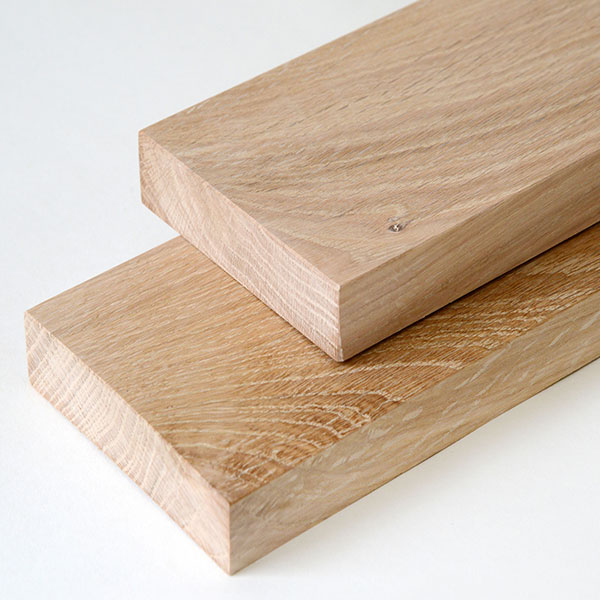
Seasoned OakDepending on origin, the heartwood varies from light tan to deep brown, with distinct bands of early wood and latewood. The grain is usually straight, but irregular or cross grain can occur. The texture is coarse, and rays and growth rings show an attractive figure ('silver grain') when quarter sawn. Seasoned Oak is typically used for exterior applications. Normally full of character and used for structural members whilst providing an attractive look. Popular in timber frame structures and rustic buildings. Similar to Green Oak but this has been left to weather and season. Will be grey and silver where faces have been exposed but will appear 'clean' and fresh if re-cut. Seasoned Oak is likely to have splits and 'shakes' adding to the character and appeal

|
Further reading on Seasoned Oak timber:
If you would like to read a full profile specification on Seasoned Oak timber, please visit our sister site, Any One wood, The online wood reference database.
https://www.anyonewood.com/seasoned-oak/
|
Material Type:
Hardwood
Also Called:
English Oak, Pendunculate Oak, Common Oak, Sessile Oak, Durmast Oak
Durability Notes:
The heartwood of European oak is durable and highly resistant to preservatives. The sapwood, however is vulnerable to powder-post and common furniture beetles. European oak is a good alround performer.
Seasoning:
The drying and seasoning of Seasoned Oak is dependant on a number of factors; the speed in which it is processed after felling and logging, the method of drying and the specific kilns or location (if air dried). Generally the care taken by those processing the wood will have an impact on its drying and seasoning. As an overview; Seasoned Oak - Drying is slow, with a tendency to check, split, warp and honeycomb; shrinkage is high. Movement in service is medium. Please note that all wood is liable to move when in service plus there can be dimensional change. The extent of this will depend on; the stability of the species itself, the conditions it is exposed to, the coating, decoration and protection. You will find more information about the suitability of this wood, for any proposed application, by using our interactive system and the filters shown.
Properties:
Oak is fairly hard, heavy and dense, with high crushing and bending strength, low stiffness and resistance to shock loads. It is very good for steam-bending. It is fairly hard to work with hand tools, with a tolerable to severe blunting effect. Pre-drilling is advised for nailing and screwing. It turns adequately and is good for gluing. Oak is good for painting, staining, oiling, varnishing and will take a high polish. The tannin content may corrode ferrous metals, particularly when exposed externally - the tannin can also cause staining to adjacent surfaces.
Typical Uses:
Furniture and cabinetmaking, joinery including church pews and pulpits, office furniture, kitchen cabinets, flooring including parquet, coffins, boats and harboured work, truck bodies. Also cooperage for wines, cognac and beer. Oak is sliced for decorative veneers and rotary-cut for plywood.
Moisture Content:
Varies - can be as high as 70% (down to around 20%)
Sustainability:
Considered as of least concern by The IUCN Red List of Threatened Species (last assessed in 2007)
Wood Worker's Thoughts:
This has normally been air dried and seasoned over many years. Un-sawn faces will be naturally weathered, grey with staining, splits twists and inconsistent marks and colouring, adding to character. Ideal for use in old buildings for beams, posts, lintels and constructional work.
« Go Back
|
 Quote Request