 Quote Request
Compare Multiple Quotes On Your Made To Match Wooden Products


MDF vs MFC Boards: Which Panel Is Best for Custom Furniture and Joinery Projects?
Choosing the right panel material is one of the most important decisions in custom furniture making and joinery. Two of the most commonly used engineered boards are MDF (Medium-Density Fibreboard) and MFC (Melamine Faced Chipboard). At first glance, they may seem interchangeable, but in practice they behave very differently. Understanding their strengths, limitations, and ideal use cases can make the difference between a project that lasts for years and one that quickly shows wear.
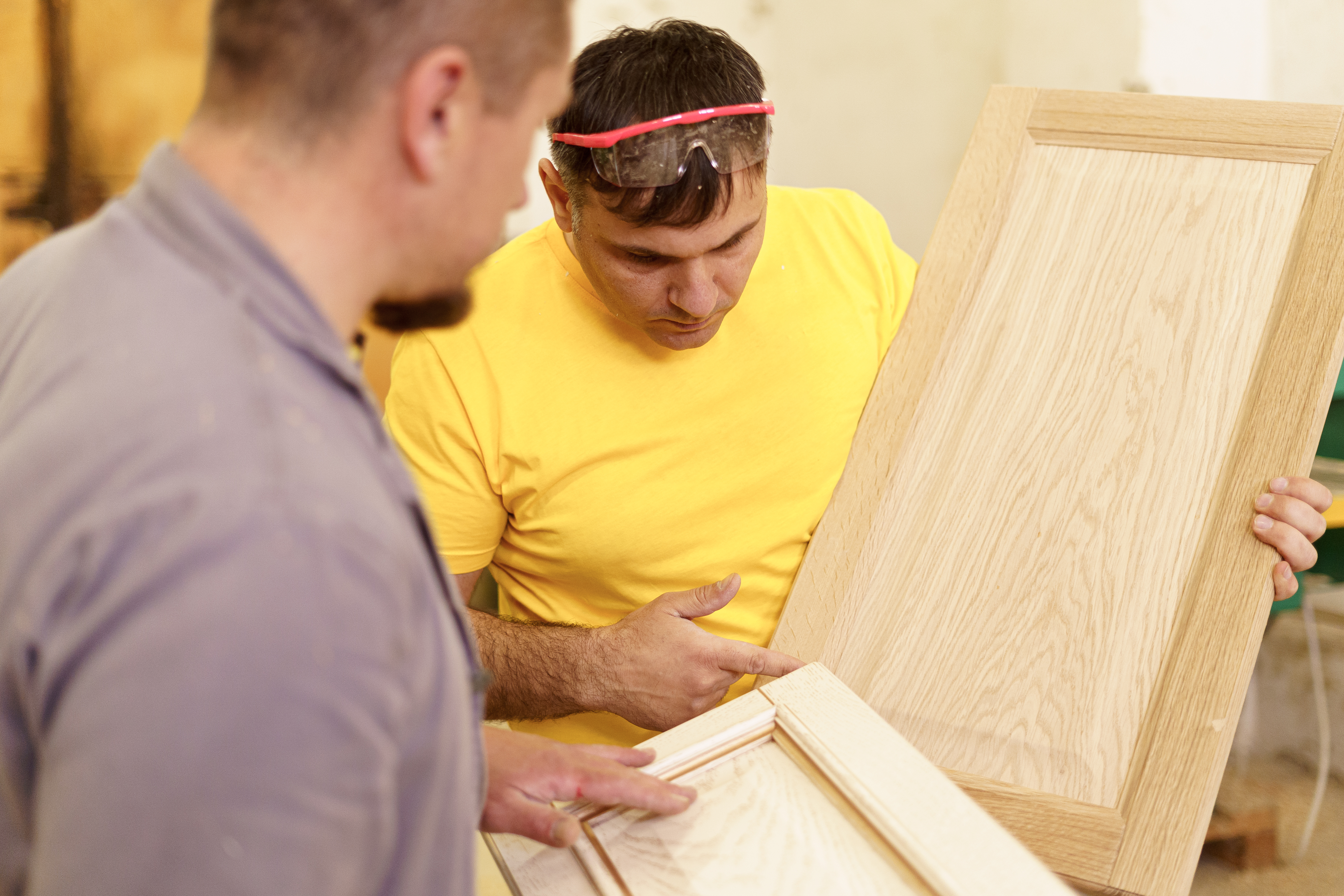
This guide breaks down the real-world differences between MDF and MFC to help you make informed, practical decisions for furniture and joinery projects.
What Is MDF?
MDF is made from fine wood fibres combined with resin and compressed under high pressure. The result is a dense, uniform panel with no visible grain, knots, or voids.
One of MDF's defining characteristics is consistency. Because the fibres are evenly distributed, MDF behaves predictably when cut, drilled, or routed. This makes it a popular choice for detailed work and painted finishes.
Advantages of MDF
MDF excels when precision and surface quality matter. Its smooth faces and edges are ideal for paint, veneers, and laminates. Routed details, such as grooves, profiles, and decorative edges, are clean and sharp compared to many other board materials.
It also accepts adhesives very well, making it suitable for complex assemblies. For custom joinery where tight tolerances and clean lines are essential, MDF often feels easier to work with than coarser boards.
Limitations of MDF
Despite its strengths, MDF is not without drawbacks. It is heavy for its thickness and can be difficult to handle in large sheets. More importantly, standard MDF is vulnerable to moisture. Exposure to water can cause swelling, loss of strength, and surface damage unless moisture-resistant grades are used.
Fixing strength is another consideration. Screws can pull out more easily from MDF edges compared to solid wood or plywood, especially if fittings are over-tightened.
What Is MFC?
MFC, or Melamine Faced Chipboard, consists of a chipboard core bonded with decorative melamine surfaces. These factory-applied finishes are hard-wearing and available in a wide range of colours, textures, and wood-effect designs.
MFC is widely used in kitchen units, wardrobes, office furniture, and shelving, where clean, consistent finishes and cost efficiency are key priorities.
Advantages of MFC
The biggest advantage of MFC is its ready-to-use surface. Because the melamine face is already applied, there is no need for painting or additional finishing. This saves both time and labour, particularly on larger projects.
MFC is generally lighter and more affordable than MDF. Its surface is resistant to scratches, stains, and everyday wear, making it suitable for high-use furniture such as cabinets and storage units.
Limitations of MFC
The chipboard core is less dense and less uniform than MDF. This means edges are weaker and cannot be routed or shaped in the same way. Exposed edges must be finished with edging tape, and any damage to the melamine surface is difficult to repair invisibly.
While MFC performs well in dry indoor environments, prolonged exposure to moisture can cause the core to degrade, even if the surface appears intact.
MDF vs MFC in Custom Furniture
When choosing between MDF and MFC for custom furniture, the intended design and finish should guide the decision.
For painted furniture, MDF is usually the superior option. Its smooth surface and ability to hold crisp details make it ideal for bespoke cabinetry, built-ins, and furniture with decorative elements.
For modular furniture, wardrobes, and storage units where flat panels and durability matter more than shaping, MFC often makes more sense. Its pre-finished surface allows for faster production and consistent results.
Joinery Applications and Practical Considerations
In joinery projects, material choice often comes down to function. MDF works well for internal architectural elements such as wall panelling, window boards, and decorative features where a flawless finish is required.
MFC is better suited to carcass construction, shelving, and units where strength across flat spans and a durable surface are priorities. However, careful attention must be paid to edge protection and fixing methods.
Both materials benefit from precise cutting and quality edge finishing. Suppliers and workshops such as cworkshop.co.uk often focus on accuracy, machining quality, and material suitability, which are crucial regardless of the board you choose.
Cost, Efficiency, and Project Scale
Budget is always a factor. MDF typically costs more per sheet than standard MFC, and additional finishing increases overall project costs. However, MDF can reduce labour time for complex shapes and painted finishes.
MFC tends to be more economical for large-scale projects where repetition and speed matter. The factory finish eliminates multiple finishing steps, which can significantly reduce build time.
Environmental and Longevity Factors
Both MDF and MFC are engineered wood products that make use of wood by-products, which can be seen as a more efficient use of raw materials. However, longevity depends heavily on correct application.
Using MDF in damp conditions or MFC in applications requiring heavy edge machining often leads to premature failure. Selecting the right board for the right environment is essential for long-term performance.
Which One Should You Choose?
There is no universal winner between MDF and MFC. Each material excels when used appropriately.
Choose MDF if your project requires:
- Painted or veneered finishes
- Detailed routing or shaping
- Smooth, seamless surfaces
Choose MFC if your project prioritises:
- Pre-finished durability
- Cost efficiency
- Flat-panel construction and storage
Final Thoughts
MDF and MFC are both invaluable materials in modern furniture making and joinery. The key is understanding what each board is designed to do, rather than treating them as interchangeable. When matched correctly to the project, both materials can deliver durable, professional results that meet both functional and aesthetic goals.
Posted on Thursday 04 June 2026 at 11:46
Whilst we have checked the links in this article before publishing we cannot guarantee the content on these sites, please use your own caution and report any issues. All images used in this article remain copyrighted to the original author who's link is placed in the article.
PRODUCT WIZARD
We'll guide you to your perfect wood solutionClick to help with your selection
CONTINUE >>